
 By Robert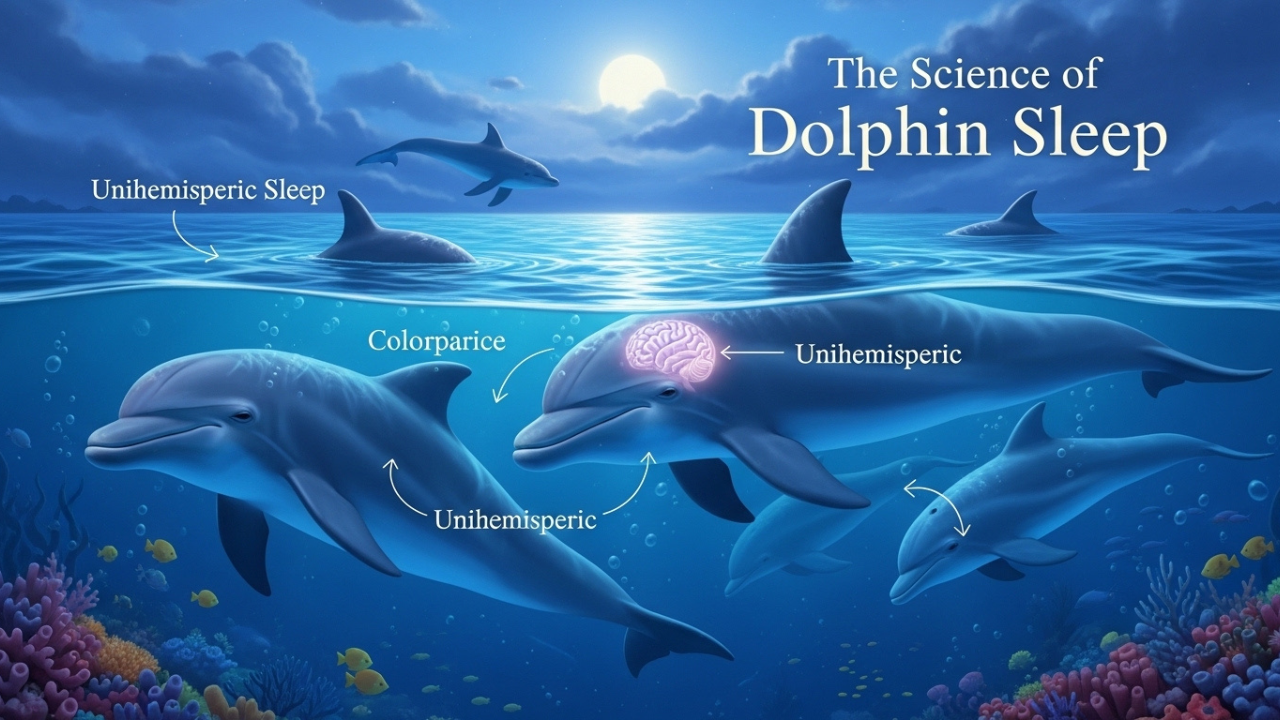
Have you ever wondered how do dolphins sleep? These incredible marine mammals have fascinated us for centuries with their intelligence, social behavior, and playful antics. But unlike humans, dolphins don’t fully shut down when they rest. Instead, they’ve developed a unique sleeping pattern that allows them to stay aware of their surroundings while still getting the rest they need.
Imagine drifting into slumber while swimming gracefully through the ocean—sounds dreamy, right? Dolphins have mastered this art thanks to their remarkable biology. Join us as we dive deeper into the science of dolphin sleep and uncover amazing facts about these captivating creatures. You might be surprised by what we discover together!
The Science of Dolphin Sleep: How These Marine Mammals Rest
Dolphins possess a fascinating ability to sleep while remaining partially conscious. They achieve this through a process called unihemispheric slow-wave sleep (USWS). This means that one hemisphere of their brain can rest while the other stays alert. It’s an essential adaptation for survival in the wild.
During USWS, dolphins may float at the surface or swim slowly alongside their pod. Their bodies remain poised to react to potential threats, like predators or boats nearby. This unique sleep pattern allows them to maintain social bonds and stay aware of their environment even when resting.
Typically, dolphins will alternate which side of their brain sleeps, ensuring they get adequate rest without losing touch with reality. This remarkable capability not only highlights their intelligence but also showcases how evolution has fine-tuned these marine mammals for life in the ocean’s depths.
How do dolphins sleep?
Dolphins have a unique way of sleeping that sets them apart from other mammals. Unlike humans, they can’t afford to fully shut down their brains because they need to be conscious swimmers. Instead, dolphins practice unihemispheric slow-wave sleep (USWS). This means one half of their brain sleeps while the other stays alert.
During this fascinating state, dolphins can surface for air and remain aware of potential threats in their environment. They often swim slowly near the surface or rest in shallow waters. Some even engage in social behaviors while partially asleep!
This remarkable adaptation allows them to recharge without sacrificing safety or mobility. It’s an impressive example of evolution at work, demonstrating how these marine mammals have mastered survival strategies in their underwater realm.
Amazing facts about whales and dolphins
Whales and dolphins are some of the most intelligent creatures on Earth. They communicate using complex vocalizations, often referred to as songs or clicks, which can travel long distances underwater. These sounds help them locate food and maintain social bonds within pods.
Some species of whales can reach incredible sizes. The blue whale holds the title for the largest animal ever known to exist, weighing up to 200 tons! Meanwhile, dolphins are agile swimmers, capable of reaching speeds up to 60 km/h (37 mph) in short bursts.
In addition to their size and speed, many dolphin species display remarkable problem-solving skills. They have been observed using tools and even engaging in cooperative hunting strategies with other marine animals like fish and seabirds. Their adaptability makes them fascinating subjects for study in both ocean environments and captivity.
Record breakers
Dolphins are not just intelligent; they’re record breakers in the aquatic world. For instance, the common dolphin holds the title for being one of the fastest marine mammals, reaching speeds up to 60 km/h (37 mph). This incredible speed aids them in evading predators and catching prey.
Then there’s the impressive bottlenose dolphin. Known for their playful behavior, they can dive to depths of over 1,000 feet and hold their breath for about 10-15 minutes. Their remarkable ability to adapt makes them fascinating creatures.
Another astonishing fact is that some species of dolphins can swim hundreds of miles in a single day while hunting or migrating. These long journeys showcase their stamina and resilience as they navigate vast ocean expanses with ease.
Brain power
Dolphins possess remarkable brain power that sets them apart in the animal kingdom. Their brains are large and complex, with a high degree of folded cerebral cortex. This structure is often associated with advanced cognitive functions seen in humans.
Research has shown that dolphins can recognize themselves in mirrors, indicating self-awareness. They exhibit sophisticated communication skills using a variety of clicks and whistles to convey different meanings. This ability to communicate effectively enhances their social structures.
Moreover, studies reveal that dolphins can solve problems and even use tools. For instance, some species have been observed using marine sponges to protect their snouts while foraging on the ocean floor. Such behaviors highlight not just intelligence but also adaptability—a crucial trait for survival in diverse environments.
Kevin Kurtz: Children’s Author & Educator
Kevin Kurtz is a talented children’s author and educator devoted to inspiring young minds. He has written numerous engaging books that introduce kids to the wonders of marine life, including dolphins and their unique behaviors. His storytelling combines fun facts with captivating narratives that spark curiosity about the ocean.
Kurtz’s passion for teaching goes beyond writing. He actively engages with students through workshops and classroom visits, making learning interactive and enjoyable. His enthusiasm encourages children to explore nature while developing a love for reading.
Through his work, Kevin aims to foster environmental awareness in future generations. By sharing fascinating insights into marine mammals like dolphins, he nurtures an appreciation for our oceans’ beauty and importance, ensuring that the next generation understands why they should care about protecting these incredible creatures.
Online References and Resources
For those eager to dive deeper into the world of dolphin sleep, numerous online resources are available. Websites like National Geographic and PBS offer fascinating insights into marine life. They often feature expert opinions and research articles that shed light on how these animals rest.
Scientific journals provide in-depth studies about cetacean behavior. Platforms such as ResearchGate or Google Scholar can connect you with published papers detailing experiments related to dolphin sleep patterns. These sources ensure you access credible information from experts in the field.
Additionally, educational platforms like Ocean Conservancy and Dolphin Research Center offer engaging content aimed at both kids and adults. They create awareness about dolphins while providing enjoyable facts that make learning fun! Exploring these references will enrich your understanding of how do dolphins sleep within their unique aquatic environment.
Photos and Images
Visualizing dolphin sleep can help us appreciate these fascinating marine mammals even more. Pictures of dolphins gracefully gliding through the water, or resting near the surface, capture their unique sleeping habits. Many images show them in pairs or small groups—evidence that they often stay close to one another while catching some Z’s.
Aerial photographs reveal how dolphins may position themselves to keep an eye on their surroundings while resting. This behavior showcases not only their intelligence but also their adaptability to life in the ocean. Artists and wildlife photographers alike have captured stunning shots of these creatures as they rest during daylight hours, showcasing both beauty and tranquility.
For those interested in learning more about how do dolphins sleep through visual storytelling, a wealth of online galleries boasts breathtaking imagery that highlights various aspects of dolphin life. These images serve as a reminder that there is still so much to learn about our oceans’ inhabitants and their remarkable adaptations for survival—a testament to nature’s extraordinary design.