
 By Robert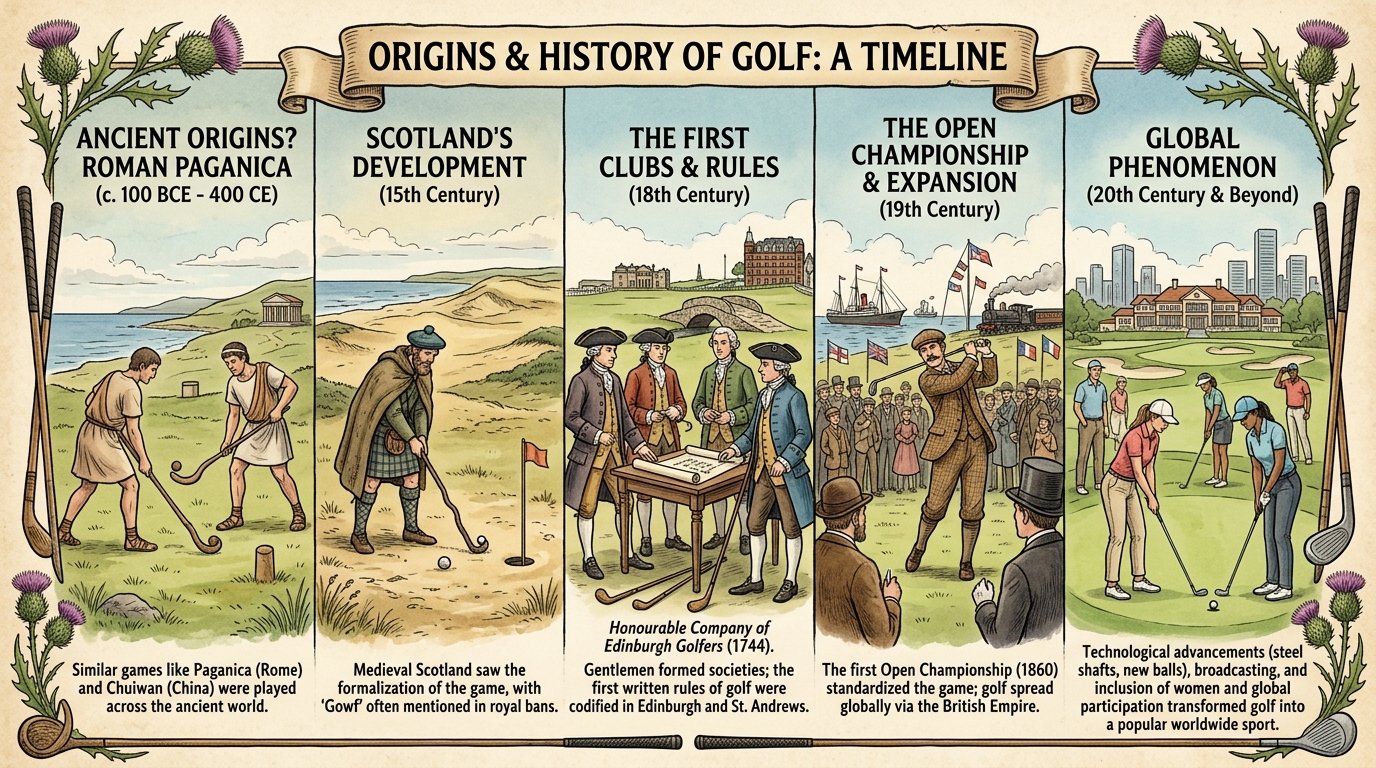
Golf is one of the world’s oldest and most beloved sports, enjoyed by millions across continents. From lush green fairways to iconic tournaments, the game has become a symbol of precision, patience, and prestige. But one fascinating question continues to intrigue players and history enthusiasts alike: who invented golf?
The answer takes us on a journey through centuries of history, disputed origins, and cultural evolution. While modern golf is strongly associated with Scotland, the roots of the game stretch much deeper into the past. Understanding where golf came from offers a fascinating glimpse into how a simple pastime evolved into a global phenomenon.
The Ancient Origins of Stick-and-Ball Games
Long before the word “golf” existed, civilizations around the world played games involving sticks and balls. These early sports laid the foundation for what would eventually become golf.
Ancient Romans played a game called paganica, using a bent stick to strike a stuffed leather ball. Similarly, the Chinese game chuiwan, which dates back to the Song Dynasty (960–1279), involved hitting a ball into holes using specialized clubs. Historical illustrations even show players using equipment remarkably similar to modern golf clubs.
The Dutch also played a medieval game known as kolf or kolven, where participants struck a ball toward a target over long distances. This game was particularly popular during the Middle Ages and bears striking similarities to golf.
While these ancient games contributed to golf’s development, none perfectly match the rules and structure of the sport we know today.
Scotland: The Birthplace of Modern Golf
When people ask who invented golf, Scotland is almost always the answer. The modern version of golf originated there during the 15th century.
The earliest written reference to golf appears in a 1457 Act of the Scottish Parliament. King James II banned golf because it distracted men from military training, particularly archery. This official record confirms that golf was already popular enough to warrant government attention.
Later Scottish monarchs, including King James IV, embraced the game. By the early 16th century, golf had become a favored pastime among nobles and commoners alike.
Scotland’s rugged coastal landscapes, especially the sandy links terrain, provided the ideal environment for the sport to flourish. These natural courses shaped the unique character of golf.
Why Scotland Claims Golf
Several factors solidify Scotland’s position as golf’s true birthplace:
- The first documented use of the word “golf”
- The earliest recorded golf ban
- Development of standardized rules
- Creation of the first permanent golf courses
- Establishment of golf clubs
Unlike earlier stick-and-ball games, Scottish golf evolved into a structured sport with recognizable rules, holes, and courses.
This distinction is crucial. While many cultures played similar games, Scotland transformed the concept into modern golf.
The Legendary Old Course at St Andrews
No discussion of golf’s origins would be complete without mentioning St Andrews.
Often called “The Home of Golf,” the Old Course at St Andrews dates back to the early 1400s. Located in Fife, Scotland, it remains one of the most iconic sporting venues in the world.
St Andrews played a pivotal role in shaping golf’s traditions. It was here that the standard 18-hole course became established in 1764, setting the template followed worldwide today.
Golfers from every corner of the globe dream of playing this historic course.
The Evolution of Golf Equipment
Early golf was played with rudimentary equipment far removed from today’s high-tech clubs.
Golf Balls
The first golf balls were made of wood, typically beech or boxwood. In the 17th century, the “featherie” emerged—a leather pouch stuffed tightly with boiled feathers.
These handmade balls were expensive and fragile.
The introduction of the gutta-percha ball in 1848 revolutionized the game. Made from dried tree sap, it was cheaper, more durable, and easier to manufacture.
Golf Clubs
Early clubs were handcrafted from wood. Clubheads often used hardwoods like apple or beech, while shafts were typically made from ash or hazel.
Modern steel, graphite, and titanium clubs wouldn’t appear until centuries later.
The First Rules of Golf
Golf needed structure to grow beyond a recreational pastime.
In 1744, the Gentlemen Golfers of Leith drafted the first official rules for a tournament held in Edinburgh. These thirteen rules became the foundation of the modern game.
Many of the principles remain recognizable today, including procedures for teeing off, playing hazards, and holing out.
The Royal and Ancient Golf Club of St Andrews, founded in 1754, later became one of golf’s primary governing bodies.
Golf Spreads Across the World
From Scotland, golf rapidly expanded internationally.
England
Golf gained popularity among British aristocrats during the 18th century.
United States
Scottish immigrants introduced golf to America in the late 19th century. The first permanent U.S. golf club, St. Andrew’s Golf Club, was established in Yonkers, New York, in 1888.
Global Expansion
By the early 20th century, golf had spread to:
- Canada
- Australia
- South Africa
- Japan
- Continental Europe
Today, golf is played in more than 200 countries.
The Rise of Professional Golf
Professional golf emerged in the late 19th century.
The first Open Championship was held in 1860 at Prestwick Golf Club in Scotland. It remains the oldest major championship in golf.
As the sport grew, legendary players elevated its popularity, including:
- Harry Vardon
- Bobby Jones
- Ben Hogan
- Arnold Palmer
- Jack Nicklaus
- Tiger Woods
Each helped transform golf into a global entertainment powerhouse.
Debates About Golf’s True Inventor
Despite Scotland’s widely accepted claim, historians continue debating golf’s precise origins.
The Chinese Connection
Some scholars argue that chuiwan may have influenced European golf through trade routes.
Ancient Chinese artwork depicts players using clubs to hit balls into targets, a concept remarkably similar to golf.
The Dutch Theory
Supporters of the Dutch origin point to kolf as a likely predecessor. The word “golf” may even derive linguistically from the Dutch term.
Why Scotland Still Wins
Although these games share similarities, Scotland deserves credit for codifying the sport.
Modern golf’s rules, courses, scoring, and traditions all developed there.
In sports history, invention often belongs not to the first concept but to the culture that formalized it.
Golf’s Cultural Impact
Golf has influenced culture far beyond the course.
It has become:
- A major Olympic sport
- A global business industry
- A networking staple
- A symbol of prestige and leisure
Golf courses host major tournaments watched by millions, including:
- The Masters
- The U.S. Open
- The Open Championship
- The PGA Championship
The sport’s reach continues expanding into new markets worldwide.
Fun Facts About Golf History
- Golf was banned in Scotland three times.
- Mary, Queen of Scots, popularized the term “caddie.”
- The standard golf hole measures 4.25 inches in diameter.
- The first golf balls were handcrafted and costly.
- Golf returned to the Olympics in 2016 after a 112-year absence.
Why Golf Endures
Golf’s longevity stems from its unique appeal.
It combines:
- Physical skill
- Mental strategy
- Social interaction
- Outdoor recreation
- Lifelong accessibility
Few sports can be played competitively from childhood into old age.
Its rich traditions connect modern players to centuries of history.
Final Answer: Who Invented Golf?
While ancient civilizations played similar stick-and-ball games, modern golf was invented in Scotland during the 15th century.
Scotland provided the rules, courses, terminology, and traditions that define the sport today. St Andrews became its spiritual home, and Scottish golfers carried the game across the globe.
So, when someone asks who invented golf, the most accurate answer is simple: Scotland invented the game as we know it.
From humble beginnings on windswept coastal links to the grand stages of Augusta and St Andrews, golf’s journey is one of remarkable evolution.
Its enduring popularity ensures that the story of golf will continue for generations to come.