
 By Robert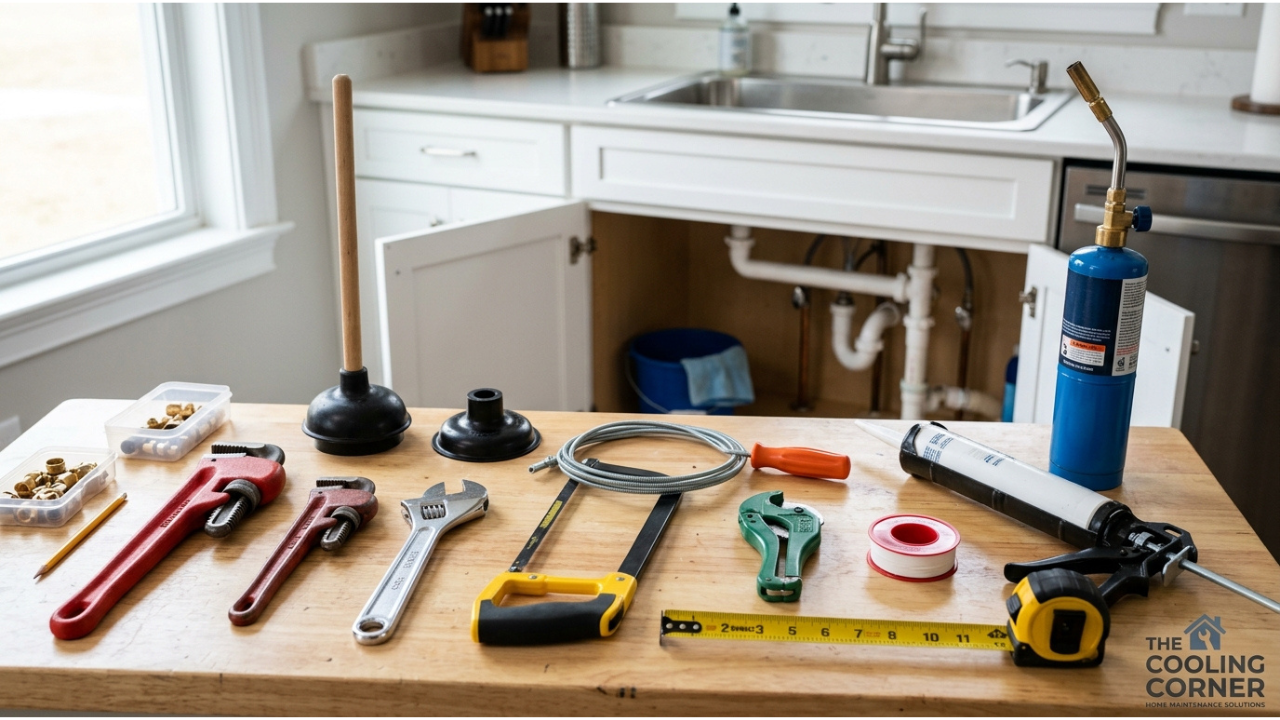
Whether you’re dealing with a dripping faucet at midnight or a slow-draining sink on a Sunday, having the right plumbing tools on hand can save you hundreds — even thousands — of dollars in service calls. The good news? You don’t need to be a licensed plumber to handle most household plumbing jobs.
This complete 2026 guide covers every essential plumbing tool a homeowner should own, from budget-friendly basics to smart upgrades that make repairs faster and easier. We’ll also explain exactly what each tool does and when to use it — so you’re never caught off guard again.
Why Every Homeowner Should Own Plumbing Tools
Plumbing problems don’t wait for business hours. A burst pipe, a clogged toilet, or a leaking water heater connection can happen anytime — and emergency plumber rates can run $150–$350 per hour or more. Even a basic toolkit costing under $200 can pay for itself after just one DIY repair.
Beyond cost savings, having the right tools means:
- Faster response times to leaks and clogs before they cause water damage
- Better understanding of your home’s plumbing system
- Confidence to handle routine maintenance on your own
- Peace of mind that you’re prepared for the unexpected
Let’s dive into the tools you need, organized from the most essential to the more advanced.
1: Must-Have Basic Plumbing Tools
These are the non-negotiables — the tools every homeowner should have regardless of skill level.
1. Plunger (Cup & Flange)
The most iconic plumbing tool for a reason. Every home needs two types:
- Cup plunger — flat rubber cup, ideal for sinks, tubs, and showers
- Flange plunger — has an extended rubber flap that fits toilet drains perfectly
Pro Tip: Many homeowners only own one plunger and use it for everything — a cup plunger won’t create a proper seal on a toilet, so it’s worth having both.
When to use it: Clogged toilets, slow sink drains, backed-up bathtubs.
2. Pipe Wrench
A pipe wrench is the backbone of any plumbing toolkit. These heavy-duty, adjustable wrenches are designed specifically to grip and turn pipes and fittings made of iron, steel, or other metals.
Key features to look for:
- At least one 14-inch and one 18-inch model
- Heavy-duty aluminum or steel construction
- Self-tightening jaw mechanism
When to use it: Tightening or loosening threaded pipe connections, replacing shut-off valves, working on water heaters.
3. Adjustable Wrench (Crescent Wrench)
Unlike the pipe wrench, an adjustable wrench is smooth-jawed and ideal for working with nuts and bolts on faucets, supply lines, and compression fittings. It’s a gentler tool that won’t damage chrome or polished finishes.
Keep at least one 8-inch and one 12-inch adjustable wrench in your kit.
When to use it: Connecting supply lines, tightening faucet hardware, working under sinks.
4. Plumber’s Tape (Teflon Tape)
This thin white tape is one of the most inexpensive yet critical plumbing supplies you can own. Wrapped around threaded pipe joints, Teflon tape creates a watertight seal that prevents leaks.
A single roll costs less than $2 and can be used dozens of times.
When to use it: Anytime you’re assembling or reconnecting threaded pipe joints, shower heads, or hose bibs.
5. Drain Snake (Hand Auger)
When a plunger isn’t enough, a drain snake (also called a hand auger) is your next line of defense. It’s a flexible, coiled metal cable that you feed into a drain to physically break up or retrieve clogs.
- 25-foot hand auger works for most sink and tub clogs
- Toilet auger (closet auger) has a protective rubber sleeve to avoid scratching the porcelain
When to use it: Stubborn sink clogs, hair blockages in shower drains, toilet clogs that resist plunging.
6. Utility Knife
A sharp utility knife is invaluable for scoring caulk lines, trimming pipe insulation, cutting plumber’s putty, or opening packaging. Keep several extra blades on hand — a dull blade is more dangerous than a sharp one.
Category 2: Cutting & Fitting Tools
Once you move beyond unclogging drains and into replacing pipes or fixtures, you’ll need tools designed for cutting and shaping pipe.
7. Pipe Cutter (Tube Cutter)
A pipe cutter gives you a clean, precise cut on copper or plastic pipe — far cleaner than a hacksaw. The tool clamps around the pipe, and you rotate it while gradually tightening the wheel until the pipe is cut through.
Types to know:
- Mini pipe cutters — great for tight spaces
- Standard tube cutters — for 1/4″ to 1-1/8″ diameter copper pipe
- PVC ratchet cutters — specifically designed for plastic pipe
When to use it: Replacing copper supply lines, cutting new pipe sections during remodeling.
8. Hacksaw
A good quality hacksaw handles pipe materials that tube cutters can’t — such as iron pipe, galvanized steel, or ABS plastic. Look for a hacksaw with a sturdy frame and use 32 TPI (teeth per inch) blades for metal pipe.
9. Deburring Tool (Reamer)
After cutting pipe with a tube cutter, the inside edge of the pipe is left with a sharp burr. A deburring tool (often built into the back of a tube cutter) removes this burr, which is critical for creating watertight solder joints and preventing turbulence in water flow.
Category 3: Soldering & Joining Tools
If you plan to work with copper pipe — which is still common in older homes — you’ll need soldering equipment.
10. Propane Torch
A handheld propane torch is used to heat copper pipe joints for soldering (sweating). Modern self-igniting torches are the safest and most convenient option.
Safety essentials when using a torch:
- Keep a fire-resistant cloth or heat shield nearby
- Have a fire extinguisher within reach
- Never solder near flammable materials
11. Soldering Wire & Flux
Lead-free solder is required by code for any potable water supply lines. Flux is a paste applied to pipe fittings before soldering — it cleans the metal surface and helps the solder flow evenly into the joint.
12. Emery Cloth or Pipe Cleaning Brush
Before soldering any copper joint, the pipe and fitting must be polished bright and clean. Emery cloth (sandpaper for metal) or a purpose-made pipe cleaning brush removes oxidation so the solder bonds properly.
Category 4: Measuring & Diagnostic Tools
These tools help you plan jobs accurately and track down problems you can’t see.
13. Tape Measure
A standard 25-foot tape measure is essential for measuring pipe lengths, clearances under sinks, and distances to shut-off valves. Look for one with both imperial and metric markings.
14. Level
A torpedo level (a short, 9-inch magnetic level) is perfect for plumbing work — it fits in tight spaces and the magnet can attach to metal pipe, freeing your hands. Proper slope (typically 1/4″ drop per foot) is critical for drain pipes to flow correctly.
15. Moisture Meter
One of the most useful diagnostic tools a homeowner can own, a moisture meter detects hidden water in walls, floors, and ceilings — often before visible damage appears. This is invaluable for tracking down slow leaks behind walls.
Entry-level models cost $20–$50 and can save you from discovering mold damage months too late.
16. Flashlight or Headlamp
Plumbing happens in dark places: under sinks, inside crawl spaces, behind water heaters. A bright headlamp keeps your hands free while you work. Look for one with at least 200 lumens and a tilting head.
Category 5: Sealing & Finishing Tools
Once repairs are made, these tools help you seal and finish the job properly.
17. Caulking Gun & Silicone Caulk
A caulking gun allows you to apply a smooth, consistent bead of caulk around sink bases, tub surrounds, and toilet bases. Use 100% silicone caulk for wet areas — it remains flexible and resists mold better than latex alternatives.
18. Plumber’s Putty
A soft, pliable sealing compound used to create watertight seals around sink drains, faucet bases, and strainers. Unlike caulk, plumber’s putty remains soft and easy to remove if you need to service the fixture later.
Note: Do not use plumber’s putty on plastic or marble surfaces — it can cause staining or cracking. Use silicone instead.
Category 6: Smart & Advanced Tools (Worth the Upgrade)
For homeowners who want to be truly prepared, these advanced tools are worth the investment.
19. Electric Drain Snake (Drain Auger Machine)
An electric or battery-powered drain auger can tackle much deeper and more stubborn clogs than a hand snake. Models with a 50–75 foot cable can reach clogs deep in the main drain line.
Great for homeowners with older homes or frequent clogging issues.
20. Water Pressure Gauge
High water pressure (above 80 PSI) silently damages pipes, appliances, and fixtures over time. A simple water pressure gauge screws onto any outdoor hose bib — test your pressure in under a minute. Ideal pressure is 45–65 PSI.
If pressure is consistently high, a pressure-reducing valve (PRV) installation can save your plumbing system.
21. Pipe Inspection Camera
Affordable mini drain cameras (starting around $30–$50) connect to your smartphone and let you see exactly what’s going on inside a drain or pipe. This eliminates guesswork and helps you decide whether a DIY fix is appropriate or if a plumber is needed.
Plumbing Tool Maintenance Tips
Your tools will last longer and perform better with a little care:
- Dry metal tools thoroughly after use to prevent rust
- Oil the jaws of pipe wrenches occasionally with light machine oil
- Store properly — hang tools or use a dedicated toolbox to prevent damage
- Replace worn parts — replace snake cables that are kinked, or plunger cups that have cracked
Final Thoughts: Build Your Kit Gradually
You don’t need to buy every tool on this list at once. Start with the basics — a plunger, adjustable wrench, plumber’s tape, hand snake, and a few pipe wrenches — and add to your collection as needs arise.
A well-equipped homeowner can handle the majority of common plumbing repairs independently, saving money, time, and the stress of waiting for emergency service. In 2026, with quality tools more affordable and accessible than ever, there’s no reason to be caught unprepared.
Invest in the right tools once — and they’ll pay for themselves many times over.