
 By Robert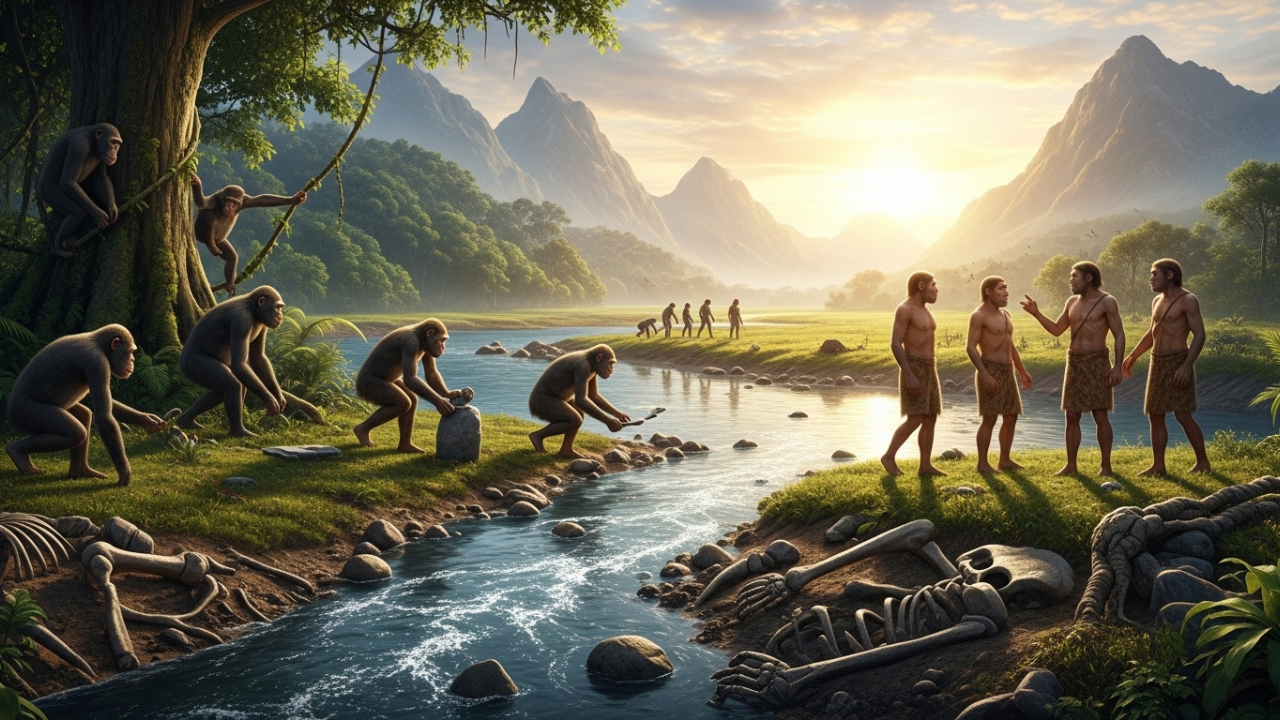
The story of humanity is an epic tale filled with mystery and intrigue. Who was the first person on earth? This question has fascinated scientists, historians, and curious minds for generations. As we dive into the depths of our origins, we’ll explore how early primates evolved into beings capable of thought, language, and culture.
Imagine a time when our ancestors roamed vast landscapes as hunter-gatherers. Picture them crafting tools from stone to hunt or gather food. The journey from primitive life to modern civilization is not just about survival; it’s a testament to innovation and adaptability.
Join us as we unravel the threads woven into the fabric of human existence—from ancient fossils whispering secrets of our past to groundbreaking genetic discoveries that reshape what we know about ourselves. Let’s embark on a thrilling exploration of where we came from and who those first humans were!
The Origins of Humanity: Exploring the First Human Beings
The origins of humanity are shrouded in mystery, yet they spark a profound curiosity within us. The journey begins millions of years ago, with our primate ancestors navigating the trees and jungles. These ancient beings laid the groundwork for what would eventually evolve into modern humans.
As we trace back through time, we encounter various hominin species that walked the Earth before us. From Australopithecus to Homo habilis, each played a crucial role in shaping our lineage. They adapted to their environments in remarkable ways, setting the stage for future advancements.
Around 200,000 years ago, Homo sapiens emerged as a distinct species. With larger brains and advanced cognitive capabilities, they began to exhibit behaviors that indicate early forms of culture and social structures. Their ability to communicate paved the way for collaboration and innovation.
This evolutionary journey continues to captivate researchers today as they piece together fragments from fossils and artifacts discovered across continents—each finding illuminating another facet of who we are at our core.
Early Evolution of Primates
The story of humanity begins with primates, our ancient relatives that roamed the earth millions of years ago. These fascinating creatures emerged during the late Cretaceous period, around 65 million years ago. This was a time when dinosaurs ruled the land and mammals were just starting to evolve.
Early primates were small, tree-dwelling animals. They developed traits that helped them thrive in arboreal environments. Grasping hands and forward-facing eyes allowed them to navigate trees efficiently while spotting predators.
As they adapted to their surroundings, these early primates branched out into various species. The evolutionary leap from these ancestral forms led to distinct lineages: prosimians like lemurs and tarsiers, as well as higher primates such as monkeys and apes.
Over millions of years, environmental changes influenced their evolution dramatically. As some species ventured onto land or adapted to different habitats, they set the stage for what would eventually lead to human beings—the culmination of this remarkable evolutionary journey.
Human Evolutionary Timeline
The human evolutionary timeline is a fascinating journey that stretches back millions of years. It begins with our distant primate ancestors, who roamed the Earth around 65 million years ago. These early creatures adapted to their environments, setting the stage for future evolution.
Around six million years ago, hominins began to diverge from other apes. This marked a crucial shift in our development. Species like Sahelanthropus and Ardipithecus emerged as bipedal beings, walking on two legs while still retaining some tree-climbing abilities.
As time progressed, different species evolved and flourished across various regions. Australopithecus appeared about four million years ago, showcasing both primitive traits and advanced locomotion skills. Notably, it was during this period that tools started becoming integral to survival.
By approximately two million years ago, Homo habilis emerged with more sophisticated tool-making capabilities. This transition signified not just physical change but also cognitive advancement in early humans as they navigated their environment with increasing complexity.
Tools and Behavioral Modernity
The evolution of tools marks a significant turning point in human history. Early humans, our ancestors, began to craft and use simple implements made from stone, wood, and bone. These early tools were essential for hunting and gathering food. Their creation signified the dawn of innovation.
As time progressed, tool-making became more sophisticated. The introduction of flaked stones led to sharper edges and better functionality. This advancement allowed early humans not just to survive but also to thrive in challenging environments.
Behavioral modernity emerged alongside these advancements. It encompassed complex social structures, communication methods, and artistic expression. Cave paintings provide insight into the cognitive abilities of our ancestors; they tell stories through imagery that transcends language.
This combination of advanced tools and behavioral complexity laid the groundwork for what makes us distinctly human today. The ability to create art or build social networks demonstrates an intelligence far beyond mere survival instincts.
Evidence from Fossils and Genetics
Fossils and genetics provide crucial insights into our origins. Fossil records offer a window into the past, revealing various hominin species that walked the Earth long before modern humans appeared. These remnants highlight physical traits and adaptations over millions of years.
Genetic analysis further deepens our understanding of human evolution. By studying DNA from ancient remains, scientists can trace lineage patterns to uncover how early humans are related to one another and other primates. This genetic mapping reveals migration routes and interbreeding events.
One fascinating aspect is the discovery of Neanderthal DNA in contemporary humans. This suggests that there were interactions between different human species, contributing to our genetic diversity today.
As we continue exploring fossils alongside advancements in genetic technology, each new finding reshapes our understanding of who we are and where we come from. The story of humanity’s beginnings becomes richer with every excavation and gene sequenced.
Human Dispersal and Inter-Species Breeding
Human dispersal began as early Homo sapiens migrated out of Africa around 70,000 years ago. This movement marked a significant turning point in human history. Groups ventured into Asia, Europe, and eventually the Americas. Each migration led to unique adaptations in response to diverse environments.
As humans spread across various regions, they encountered other hominin species such as Neanderthals and Denisovans. Genetic evidence shows that these interactions were not mere coincidences; inter-species breeding occurred frequently. This blending contributed valuable traits to modern humans.
For example, Neanderthal genes have been linked to immune responses and skin pigmentation in contemporary populations of European descent. Similarly, some groups carry DNA from Denisovans that may impact adaptation to high altitudes.
These encounters enriched our genetic tapestry and shaped who we are today. The fascinating story of human dispersal reveals much about our resilience and adaptability throughout history.
Stone Tools and Evolution
Stone tools represent a significant leap in early human evolution. They mark the transition from simple survival to innovative problem-solving. Our ancestors fashioned these tools not just for hunting but also for processing food and crafting other items.
The earliest stone tools date back around 3.3 million years, found in Africa’s Great Rift Valley. These rudimentary flakes demonstrate an understanding of material properties and cutting techniques that were revolutionary at the time. They laid the foundation for more complex tool-making strategies.
As humans evolved, so did their tools. The development of hand axes and later specialized implements showcased increased cognitive abilities and adaptability to various environments. This evolution was crucial as it allowed our ancestors to exploit different resources.
Furthermore, these advancements facilitated social interactions among early humans—sharing knowledge on how to create and use tools strengthened community bonds. Thus, stone tools are not merely artifacts; they are milestones marking the journey of humanity’s growth and ingenuity through generations.
Human Evolution: Historical Perspectives
The study of human evolution is a tapestry woven from various threads: fossil evidence, genetic data, and archaeological finds. Historical perspectives have shaped our understanding and continue to challenge it. Anthropologists and paleontologists have debated the timeline of early humans for decades.
Our journey began millions of years ago with the emergence of primates in Africa. As we trace back through time, significant milestones emerge—like the development of bipedalism or tool-making skills that marked behavioral modernity. Each discovery adds depth to our knowledge about who was the first person on earth.
Cultural narratives also influence how we view human origins. Myths, religious texts, and storytelling shape beliefs about humanity’s beginnings across different cultures.
As research progresses, new models arise that reshape previous notions regarding inter-species breeding among hominins like Neanderthals and Denisovans.
Understanding where we come from offers insight into who we are today. It provides context for our shared experiences as a species while reminding us that exploration continues—both in the field and within ourselves. The quest to understand humanity is far from over; every find could redefine what it means to be human in this vast narrative stretching beyond mere existence.